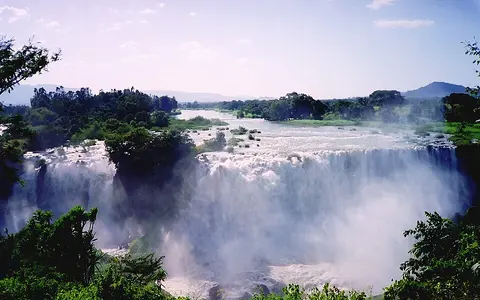

What Blue Nile Falls is
Blue Nile Falls, also known locally as Tis Abay, is a waterfall on the upper Abay River in northwestern Ethiopia. It lies downstream from Lake Tana and near the point where the river begins to leave the lake-basin setting for a more deeply incised plateau gorge.
The record is important because the falls are not an isolated brink. They mark a transition from broad highland water storage and outlet flow to the steeper, gorge-cutting river course that becomes the Blue Nile.
Lake Tana outflow and volcanic plateau rock
Lake Tana functions as the major upstream water body for this reach of the Abay. From the lake outlet near Bahir Dar, the river flows across Ethiopian Plateau terrain before reaching the waterfall and entering a more confined channel.
Volcanic rock is central to the landform. Resistant basalt and lava-controlled edges help create the abrupt drop, while downstream erosion works into the same highland framework to form a gorge. This makes Blue Nile Falls a useful example of how bedrock, river gradient, and plateau drainage interact.
Lake-fed river reach
Lake Tana moderates the upstream setting before the river steepens downstream.
Volcanic ledge
Basalt and lava surfaces help define the waterfall edge.
Early incision zone
Below the falls, the river begins a more entrenched path through the plateau.
Seasonal flow and regulated discharge
The waterfall's form changes strongly with discharge. Ethiopian summer rains increase runoff across the highlands and can widen the fall across the rock face, while drier periods reduce flow and expose more of the brink and channel structure.
Modern flow is also affected by water-control and hydropower works near the Lake Tana outlet and falls reach. For an atlas record, the key point is that the waterfall is governed by both natural highland seasonality and managed diversion, so any single width or flow description should be treated as conditional.
From Ethiopian highlands to the Nile corridor
Blue Nile Falls belongs to the Ethiopian highlands, but its downstream connection is continental. The Abay flows away from Lake Tana, cuts through the Blue Nile gorge, and eventually joins the White Nile in Sudan to form the main Nile.
That relationship makes the falls a bridge between waterfall geography and basin geography. The page connects naturally to the waterfalls hub and the Nile River record because the landform sits near the beginning of a major tributary system rather than at the edge of a short local stream.